Stroke Rehabilitation Tips for a Stronger Life After Stroke
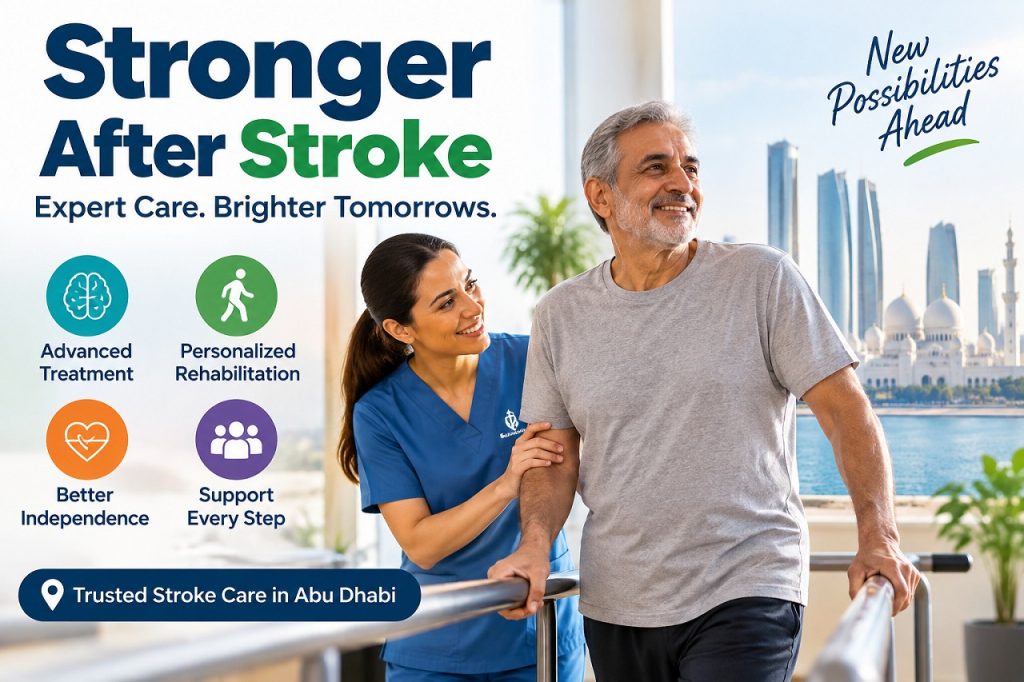
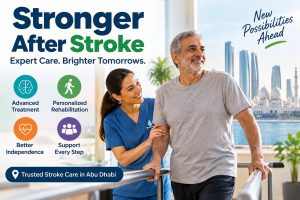
A hopeful stroke rehabilitation session where a patient practices mobility on parallel bars assisted by a compassionate healthcare professional. Warm, natural light floods the facility, highlighting the determined expression of the man and the supportive presence of his therapist against a bright city backdrop. Professional stroke rehabilitation services focusing on patient mobility and expert clinical care. #healthcare #recovery #wellness
A stroke can change ordinary routines in a matter of minutes. Walking, speaking, eating, remembering, working or simply getting dressed may suddenly require more effort than before. For survivors and families, the uncertainty can be as difficult as the physical changes themselves. The encouraging part is that recovery is not necessarily finished when the hospital stay ends. Stroke rehabilitation can help a person rebuild skills, improve independence and adapt to changes caused by stroke.
Recovery looks different for every survivor. Some people regain many abilities quickly, while others need months or years of structured therapy and support. The most useful approach is usually a personalized plan involving doctors, rehabilitation specialists, therapists, caregivers and the survivor. Current stroke guidance also emphasizes that rehabilitation can continue beyond formal programs as people work toward meaningful daily activities and long-term independence.
Quick Answer: Stroke rehabilitation is a personalized process that helps a person regain or adapt physical, communication, cognitive and daily living abilities after a stroke. It may involve physical therapy, occupational therapy, speech and language therapy, cognitive rehabilitation and caregiver support. Recovery varies widely, so progress should be measured against individual goals rather than someone else’s timeline. Rehabilitation can continue for months or years when appropriate.
What Is Stroke Rehabilitation
Stroke rehabilitation is the structured process of helping a stroke survivor recover lost abilities, develop safer ways to perform daily activities and maximize independence after brain injury. Depending on the effects of the stroke, rehabilitation may address walking, balance, strength, arm and hand function, speech, swallowing, memory, concentration, vision, emotional wellbeing and everyday activities such as dressing or bathing.
Understanding Stroke Recovery
A stroke happens when blood flow to part of the brain becomes blocked or a blood vessel ruptures. Without adequate oxygen and nutrients, brain tissue can become damaged. The effects depend heavily on which area of the brain was affected, how extensive the injury was and how quickly treatment was provided.
The consequences may include:
- Weakness or paralysis on one side
- Difficulty walking or maintaining balance
- Problems using an arm or hand
- Speech or language difficulties
- Trouble swallowing
- Changes in vision
- Memory and concentration problems
- Difficulty planning or solving problems
- Fatigue
- Emotional changes
- Problems returning to work or previous activities
The important point is that there is no single stroke recovery pattern.
One person may return to normal walking relatively quickly but struggle with speech. Another may communicate well but need considerable help with movement or everyday tasks.
Recovery Is Not a Straight Line
Progress can be uneven. A survivor may improve noticeably for several weeks and then appear to plateau. Later, another period of improvement may occur after therapy is adjusted or a new skill becomes easier to practice.
The American Stroke Association notes that recovery can continue for months or years rather than ending when formal rehabilitation finishes.
Recovery Summary: Stroke recovery is individual. A slower period does not automatically mean that improvement has stopped.
Why Rehabilitation Matters
The purpose of rehabilitation is not simply to make someone exercise. It is to help the survivor function as independently and safely as possible.
A rehabilitation program may focus on:
| Area | Typical Goal |
|---|---|
| Movement | Improve strength, coordination and mobility |
| Walking | Improve gait, balance and safe transfers |
| Arm and hand function | Improve practical use of the affected limb |
| Speech | Improve communication |
| Swallowing | Improve safe eating and drinking |
| Cognition | Address memory, attention and problem solving |
| Daily living | Improve dressing, bathing and personal care |
| Vision | Address visual problems affecting function |
| Emotional wellbeing | Identify and manage psychological difficulties |
| Community participation | Support return to meaningful activities |
Current American Stroke Association guidance describes rehabilitation as an individualized process designed around functional independence, communication, mobility, cognition, social participation and other meaningful life roles.
Why Individual Goals Matter
A useful rehabilitation goal should relate to real life.
For example, instead of simply saying:
Improve arm strength
a more meaningful goal might be:
Use the affected arm to hold a cup safely during breakfast.
Instead of:
Improve walking
the practical goal might be:
Walk safely from the bedroom to the kitchen using the recommended aid.
These goals give therapy a clear purpose and make progress easier to recognize.
Recovery Summary: Effective rehabilitation connects therapy exercises with activities that matter to the survivor’s actual life.
What Happens During Stroke Rehabilitation
Rehabilitation commonly begins after the patient is medically stable. The exact timing and intensity are determined by the treating healthcare team rather than by a fixed timetable.
Cleveland Clinic Abu Dhabi describes a multidisciplinary approach involving assessment by rehabilitation professionals and individualized treatment based on the person’s functional needs and goals. Its neurorehabilitation program includes physical therapy, occupational therapy, speech and language therapy and other specialist services.
Physical Therapy
Physical therapists may work on:
- Strength
- Balance
- Coordination
- Transfers
- Walking
- Posture
- Mobility
- Range of movement
- Safe use of mobility equipment
Exercises are generally selected according to the survivor’s condition rather than following a universal routine.
Occupational Therapy
Occupational therapy focuses heavily on practical independence.
A therapist may help someone relearn:
- Dressing
- Bathing
- Eating
- Grooming
- Using kitchen equipment
- Writing
- Handling objects
- Moving safely around the home
The aim is not merely stronger muscles. It is better function in everyday life.
Speech and Language Therapy
A stroke can affect communication and swallowing.
Speech and language professionals may address:
- Speaking
- Understanding language
- Reading
- Writing
- Word finding
- Communication strategies
- Swallowing difficulties
Swallowing problems deserve particular attention because eating and drinking difficulties can create significant health risks.
Cognitive Rehabilitation
Some survivors experience difficulties with:
- Memory
- Attention
- Concentration
- Planning
- Problem solving
- Processing information
Cognitive rehabilitation can help people develop strategies for handling these challenges in everyday situations.
Recovery Summary: Stroke rehabilitation may involve several therapies because stroke can affect movement, communication, cognition and daily activities at the same time.
The Stroke Rehabilitation Team
Recovery is rarely the responsibility of one professional.
Depending on individual needs, the team may include:
- Neurologist
- Rehabilitation physician
- Physical therapist
- Occupational therapist
- Speech and language pathologist
- Rehabilitation nurse
- Psychologist
- Nutrition professional
- Social worker
- Vocational rehabilitation specialist
Cleveland Clinic Abu Dhabi describes its neurorehabilitation services as multidisciplinary, with specialists working together to assess patients and develop treatment plans around individual goals.
Why Caregivers Are Part of the Team
A family member may spend far more time with the survivor than any therapist.
Caregivers can therefore help by:
- Following agreed safety instructions
- Encouraging appropriate practice
- Recording questions for appointments
- Watching for changes
- Helping organize medications as instructed
- Supporting communication
- Making the home safer
- Respecting the survivor’s independence
Caregivers should not try to replace trained medical professionals. Their role is to support the rehabilitation plan.
How Long Does Stroke Recovery Take
There is no universal recovery deadline.
Some people make substantial progress within days or weeks. Others continue working toward improvements for months or years. Recovery depends on factors such as stroke type, location and severity, treatment, complications, overall health and the person’s ability to participate in rehabilitation.
The NHS notes that recovery may take days or weeks for some people, while others may need months or years and may need to adapt their homes, employment or daily routines.
A Simple Recovery Timeline
| Stage | Possible Focus |
|---|---|
| Hospital phase | Stabilization, assessment and early rehabilitation |
| Early recovery | Basic movement, communication and daily activities |
| Intermediate recovery | Increasing independence and functional skills |
| Long-term recovery | Maintaining gains and working on additional goals |
| Community life | Returning to family, social, recreational or work activities |
This table is a framework, not a prediction for an individual patient.
The 2026 American Stroke Association rehabilitation guidance emphasizes that recovery should be personalized and that rehabilitation can remain relevant after structured programs end.
Recovery Summary: Time alone does not determine recovery. Individual goals, medical stability, rehabilitation needs and continued practice all matter.
Life After a Stroke
Life after a stroke may involve changes that are not obvious to other people.
A survivor might look physically well while dealing with fatigue, memory problems, anxiety, communication difficulties or reduced confidence.
Returning to Daily Activities
A practical approach is to break difficult activities into smaller steps.
For example, getting dressed might become:
- Select clothing.
- Sit safely.
- Put on the less affected side first if recommended by the therapist.
- Put on the more affected side using the taught technique.
- Stand only when safe.
- Finish dressing with the appropriate support.
The exact technique should come from the person’s occupational or physical therapist because the safest method varies.
Returning to Work
Returning to employment is not simply a question of physical strength.
The healthcare team may need to consider:
- Concentration
- Communication
- Fatigue
- Mobility
- Vision
- Job demands
- Working hours
- Transportation
- Safety
- Stress tolerance
A gradual return may be appropriate for some people, while others may need workplace adaptations or a different role.
Mild Stroke Symptoms and Why They Matter
The phrase “mild stroke” can be misleading.
A stroke with relatively limited visible disability can still require medical evaluation and follow-up. Temporary symptoms can also represent a transient ischemic attack, or TIA, which is a serious warning event.
Common sudden stroke symptoms include:
- Face drooping
- Arm or leg weakness or numbness
- Speech difficulty
- Trouble understanding speech
- Sudden vision problems
- Sudden dizziness or loss of balance
- Sudden severe headache without a known cause
The CDC recommends immediate emergency action when stroke symptoms appear. If symptoms disappear after a short period, medical assessment is still important because a TIA can signal a serious risk of future stroke.
B E F A S T
B — Balance: Sudden loss of balance or coordination
E — Eyes: Sudden vision changes
F — Face: One side of the face droops
A — Arms: One arm becomes weak or drifts downward
S — Speech: Speech becomes slurred, strange or difficult
T — Time: Seek emergency medical help immediately
Do not wait to see whether symptoms improve.
Safety Summary: A suspected stroke is an emergency. Even symptoms that disappear should be discussed urgently with a healthcare professional.
Practical Stroke Survivor Tips
The following habits can make recovery more manageable.
1. Follow the Rehabilitation Plan
Attend therapy appointments and follow home recommendations from the rehabilitation team.
Consistency is generally more useful than trying to do too much at once.
2. Track Meaningful Progress
Keep a simple record of practical improvements.
For example:
- Walking farther
- Needing less assistance
- Speaking more clearly
- Using an affected hand for a task
- Completing personal care more independently
Small improvements can be easy to overlook.
3. Protect Against Falls
Falls are a common concern after stroke. The American Stroke Association identifies falls as a significant complication during the early period after hospital discharge.
Useful safety measures may include:
- Removing loose rugs
- Improving lighting
- Keeping walkways clear
- Installing appropriate bathroom supports
- Using prescribed mobility equipment
- Wearing suitable footwear
4. Manage Stroke Risk Factors
Preventing another stroke is an important part of long-term recovery.
Depending on the person’s medical situation, this may include managing:
- High blood pressure
- Diabetes
- High cholesterol
- Heart disease
- Atrial fibrillation
- Tobacco exposure
Medication should be taken exactly as prescribed.
The CDC emphasizes that people who have experienced a stroke remain at increased risk for another stroke and should work with their healthcare team on risk-factor management.
5. Make Rest Part of the Plan
Post-stroke fatigue can make ordinary activities exhausting.
Rather than assuming fatigue means a person is lazy or unmotivated, discuss persistent tiredness with the healthcare team.
6. Stay Socially Connected
Isolation can make life after stroke harder.
Appropriate social activities, hobbies, family interaction and survivor support groups can become meaningful parts of recovery.
The American Stroke Association specifically recognizes recreation and leisure activities as an important part of healthy life after stroke.
Recovery Summary: Successful recovery is about more than therapy sessions. Safety, medication adherence, risk-factor management, meaningful activities and social connection also matter.
Supporting a Stroke Survivor at Home
Family members often want to help but can unintentionally take over tasks the survivor is capable of doing.
A better approach is to ask:
What can the person safely do independently?
Then provide assistance only where needed.
Home Safety Checklist
| Area | Consideration |
|---|---|
| Bathroom | Non-slip surfaces and appropriate support |
| Bedroom | Clear path between bed and bathroom |
| Kitchen | Frequently used items within safe reach |
| Stairs | Discuss safety and mobility needs with therapists |
| Lighting | Good visibility throughout the home |
| Floors | Remove trip hazards |
| Medication | Use a system recommended by the healthcare team |
| Communication | Keep important information easy to access |
Home modifications should be personalized because mobility and cognitive limitations differ between survivors.
Emotional Support
A survivor may experience frustration, sadness, anxiety or loss of confidence.
Instead of saying:
“Just stay positive.”
try:
“I can see this is difficult. What would make today’s task easier?”
That small change acknowledges the person’s experience without making assumptions.
Common Recovery Mistakes
Doing Too Much Too Soon
More exercise is not automatically better. Rehabilitation intensity should be appropriate for the person’s medical status and recovery needs.
Current stroke guidance cautions against assuming that extremely early, high-dose mobilization immediately after stroke is always beneficial.
Comparing One Survivor With Another
Two people can have apparently similar strokes but very different recovery patterns.
Comparison can create unnecessary frustration.
Ignoring Communication Problems
A person who cannot speak easily may still understand much more than they can express.
Allow extra time for communication rather than speaking for them automatically.
Forgetting Mental and Cognitive Recovery
Physical improvements can attract the most attention, but memory, attention, mood and emotional adjustment can have a major effect on independence.
Stopping Rehabilitation Because Progress Slows
A plateau should be discussed with the clinical team rather than interpreted automatically as the end of recovery.
Recovery Summary: Avoid rushing, comparing recovery journeys or focusing only on visible physical symptoms.
What Most People Misunderstand About Recovery
Recovery Is Not Only About Walking
Walking may be an obvious milestone, but successful recovery can also mean communicating, swallowing safely, remembering appointments, cooking, returning to work or participating in family activities.
A Survivor May Look Fine and Still Struggle
Invisible effects such as fatigue, cognitive difficulties and emotional changes can be significant.
Caregivers Need Support Too
The NHS notes that caring for someone after a stroke can be difficult and that caregivers should seek appropriate support rather than attempting to manage everything alone.
Recovery Does Not Have One Deadline
The formal therapy program may finish, but recovery-related goals can continue through everyday activities and community participation.
When to Seek Medical Help
Contact the appropriate healthcare professional when a survivor develops a new or worsening problem.
Emergency medical attention is particularly important for sudden:
- Facial weakness
- Arm or leg weakness
- Speech difficulty
- Vision loss
- Severe unexplained headache
- Loss of balance
- Confusion
Do not assume that a new symptom is simply part of old stroke damage.
For suspected new stroke symptoms, emergency services should be contacted immediately rather than waiting for a routine appointment.
People Also Ask
How long does stroke rehabilitation take
Stroke rehabilitation has no fixed duration. Some survivors need weeks of intensive therapy, while others require rehabilitation and support for months or longer. Recovery can continue beyond formal therapy, depending on individual needs and goals. The healthcare team should review progress and adjust rehabilitation as appropriate.
Can you fully recover after a stroke
Some people recover very well or return close to their previous level of function, while others experience lasting disabilities. Recovery depends on factors including the type and severity of stroke, affected brain areas, treatment, complications and rehabilitation. No responsible clinician can guarantee a particular recovery outcome for an individual without assessing that person.
What therapies are used after a stroke
Common therapies include physical therapy for movement and mobility, occupational therapy for daily activities, and speech and language therapy for communication and swallowing. Cognitive, psychological, nutritional and vocational support may also be appropriate depending on the survivor’s needs.
What should stroke survivors do at home
Survivors should follow their individualized medical and rehabilitation plan, practice recommended activities safely, take prescribed medicines as directed, manage stroke risk factors and maintain appropriate physical and social activity. Home safety should also be reviewed, particularly when balance or mobility is affected.
Can stroke recovery continue after six months
Yes. Recovery rates may change over time, but improvement can continue beyond six months. The American Stroke Association notes that stroke recovery may continue for months or years, and rehabilitation can remain useful when it is matched to the person’s needs and goals.
Frequently Asked Questions
What are the first steps after a stroke
The first priority is medical stabilization and appropriate acute stroke treatment. Once the patient is medically stable, the healthcare team assesses physical, communication, cognitive and daily living needs. Rehabilitation may then begin and can involve several disciplines. The exact plan depends on the type of stroke, severity, medical condition and functional limitations. Families should ask the treating team what type of stroke occurred, what complications are being monitored, which rehabilitation services are recommended and what should happen after discharge. It is also useful to understand medication instructions and warning signs that require urgent attention. Rehabilitation does not mean simply exercising every day. It is a structured process designed around functional goals. Depending on the survivor, it may involve walking practice, hand function, speech, swallowing, memory, daily activities and strategies for returning to work or community life.
How can family members help during stroke recovery
Family support can be valuable, but the most helpful support is usually coordinated with the rehabilitation plan. Family members can encourage safe practice, attend relevant education sessions, help organize appointments and make recommended changes to the home. Communication is particularly important. Give the survivor enough time to speak or respond instead of finishing every sentence for them. Encourage independence where activities are safe, because doing everything for a survivor can sometimes reduce opportunities to practice skills. Caregivers should also watch their own wellbeing. Supporting a stroke survivor can be physically and emotionally demanding. If the responsibilities become overwhelming, speak with the healthcare team about available community, rehabilitation or caregiver resources.
What happens if stroke symptoms disappear
Symptoms that disappear can still require urgent medical assessment. A transient ischemic attack can produce temporary stroke-like symptoms without leaving permanent neurological damage, but it can be an important warning of future stroke risk. Sudden weakness, numbness, speech difficulty, vision changes, dizziness or balance problems should never be dismissed simply because they improve. The CDC advises seeking emergency medical attention for stroke symptoms and treating a suspected TIA as a serious medical event. The person should not simply wait for symptoms to return. Medical professionals need to determine what caused the episode and what steps are needed to reduce future risk.
Is rehabilitation still useful after leaving the hospital
Yes. Leaving hospital does not necessarily mean that recovery is finished. Rehabilitation may continue through inpatient rehabilitation, outpatient therapy, home-based services, telerehabilitation or carefully structured community activities. The appropriate setting depends on medical stability, disability level, endurance, home circumstances, available support and rehabilitation goals. Cleveland Clinic Abu Dhabi describes post-acute inpatient rehabilitation, outpatient rehabilitation and home health care as possible pathways depending on clinical needs. The most useful long-term approach is to keep rehabilitation connected to real-life goals, such as safe mobility, communication, personal care, returning to work or participating in family and community activities.
خدمات السكتة الدماغية وإعادة التأهيل في أبوظبي
يوفر مستشفى كليفلاند كلينك أبوظبي رعاية متخصصة لمرضى السكتة الدماغية من خلال فريق متعدد التخصصات يشمل أطباء الأعصاب وإعادة التأهيل والعلاج الطبيعي والعلاج الوظيفي وعلاج النطق واللغة وغيرها من الخدمات المتخصصة. ويشمل البرنامج التقييم والعلاج والمتابعة وإعادة التأهيل بما يتناسب مع احتياجات كل مريض وأهدافه، مع التركيز على استعادة الوظائف وتحسين الاستقلالية وجودة الحياة. لمزيد من المعلومات يمكن زيارة موقع clevelandclinicabudhabi.ae أو الاتصال على 800 8 2223. العنوان: كليفلاند كلينك أبوظبي، جزيرة المارية، أبوظبي، الإمارات العربية المتحدة.
For people seeking neurological and rehabilitation services in Abu Dhabi, Cleveland Clinic Abu Dhabi provides a multidisciplinary approach spanning stroke care, neurovascular medicine and neurorehabilitation. Its Neurovascular Medicine Program and Stroke Center provides acute stroke management and follow-up, while its Neurorehabilitation Program offers individualized physical therapy, occupational therapy, speech and language therapy, cognitive rehabilitation and other services according to patient needs.
Life after a stroke can look different from what someone originally imagined, but rehabilitation provides a structured way to work toward greater independence. The process may involve movement, communication, swallowing, cognition, emotional wellbeing and practical daily activities.
The most important lesson is that recovery should be personalized. A stroke survivor should work with the healthcare team to establish realistic goals, follow the recommended treatment plan, address risk factors and adapt the home and daily routine where necessary.
Progress may happen gradually. Some changes are obvious, while others are small improvements that only become noticeable over time. With appropriate medical care, rehabilitation and support, survivors can continue working toward meaningful activities and a fulfilling life after stroke.
Key Takeaways
- Stroke recovery is different for every person.
- Rehabilitation focuses on independence and meaningful daily activities.
- Physical, occupational and speech therapy may all be needed.
- Cognitive and emotional changes deserve attention too.
- Recovery can continue for months or years.
- New stroke symptoms require immediate medical attention.
- Temporary symptoms should not automatically be dismissed.
- Managing blood pressure, diabetes, cholesterol and other risk factors is important.
- Caregivers are part of the recovery support system.
- Home safety and realistic goals can make everyday recovery easier.